

Friday, April 5, 2013

Capa Cares Club
Wednesday afternoon Capa Cares Club members participated in a yard clean up to get the school grounds ready for the eagerly anticipated Spring weather. Great work folks! Capa Cares Club meets Monday after school @ 3:00 in studio 401.


Tuesday, March 19, 2013
Profound, Mysterious and Utterly Absorbing
Werner Herzog's Cave of Forgotten Dreams is a must see for all visual artists members of the human race.
Julie Rigg wrote this great review of the film.
"Werner Herzog once promised to eat his shoe if Erroll Morris managed to complete a documentary he had been working on on pet cemeteries. He said he did it to motivate Morris, and Morris duly went on to make the film Gates of Heaven. So in 1978 Herzog duly cooked and ate his shoe, an act which was filmed by Les Blank and became a documentary called Werner Herzog Eats his Shoe.
You don't have to be crazy to be a great documentary maker, but it helps.
Cave of Forgotten Dreams is one of Herzog's most memorable films. Its subject, the 32,000-year-old drawings on the wall of the Chauvet Cave in southern France, is so astonishing that even Herzog's amiable sidetracks can't destroy the wonder.
The drawings made by paleolithic artists over a series of times are quite beautiful, and astonishingly modern: free in form, and graceful. They are primarily drawings of animals: cattle, deer, bison, lions, horses, woolly mammoths, hyenas, and cave bears -- though there is one very striking representation of a woman, as fertility symbol.
The cave is not accessible to the public. Even scientists are allowed access only for a few hours at a time. This is both to protect the site itself (learning from the degradation of the Lascaux cave once open to tourists) and also for safety reasons, since parts of the cave are unstable and outgassing.
But wily Herzog managed to talk his way in, gaining acess for himself and a small crew. It was apparently his regular cameraman Peter Zeitlinger who persuaded Herzog to use 3D cinematography.
The resulting experience is extraordinarily intimate. We are in a very ancient art gallery, where the wall surface for these drawings has been prepared, where the 3D camera places us in close proximity to the drawings. And where the artists have used the undulating wall surface of the caves to enhance the motion of animals at full stride.
Only hunters very familiar with these animals could have made such drawings.
It's tempting to speculate on how paloelithic men used the cave, and Herzog raises some questions. Was it a place of ritual worship perhaps?
But by far the most suggestive discovery we make in the film is when Herzog is able to take us behind a curiously phallic protuberance from the roof of the cave, on which we see the bottom half of a figure very like the so-called Venus of Willesdorf.
It's a view hidden even from the scientists: but Herzog takes us there, with a tiny camera on a stick, and the cave drawings take a sudden leap from the gorgeously lifelike to the symbolic. This is a woman being mounted by a bull, or a bison.
Suddenly the mind races forward thousands of years to ancient Knossos, the bull dancers, the legend of the Minotaur. Or Picasso's drawings of the same.
It wouldn't ba a Herzog film without some personal piece of animal fetishism. Remember the monkeys on the raft in Aguirre, Wrath of God? Those damn pink flamingos popping up everywhere in his recent drama, Bad Lieutenant: Port of New Orleans?
Well here it's albino alligators who appear in a kind of postscript. I'll leave you discover why. It's the longest bow Herzog draws in the entire, marvellous film."
Tuesday, March 12, 2013
Palette Knife Painting Technique for 3D Objects by Carl Samson
Objects exist in three dimensional (3D) space. The challenge for you as a painter is to successfully represent 3D objects on a 2D surface. One way to meet this challenge is with the knife-painting technique that I’ve demonstrated below. This technique (originally taught to me by Allan R. Banks) allows you to represent a shadow or side plane receding back in space without giving that plane too much emphasis, thus causing it to “come forward” and destroy the 3D effect.


Advantage of the Knife Painting Technique
Some may approach the challenge of representing planes that recede in space by softening shadow edges, using a soft sable brush to “blend” them (a technique that is, perhaps, more useful in the finishing of a more highly realized image—not a sketch.) One should certainly aim to master this technique, but often the artist does too much blending, and the edges begin to break down. This leads to a weakening of the general and structural effect.
Some may approach the challenge of representing planes that recede in space by softening shadow edges, using a soft sable brush to “blend” them (a technique that is, perhaps, more useful in the finishing of a more highly realized image—not a sketch.) One should certainly aim to master this technique, but often the artist does too much blending, and the edges begin to break down. This leads to a weakening of the general and structural effect.
Using the palette knife technique lets you quickly push the side plane behind the picture plane—without losing the structural integrity of the form with too much blending. Also, the palette knife allows you to freely paint the visual impression. The knife does the work for you by unifying and softening these receding planes without destroying their underlying structure.
Demonstration of Knife Painting Technique
Palette Knife Painting No. 1 – Ridges Building
1. Here you see the free and loose execution at the beginning of a portrait study.
Palette Knife Painting No. 2 – Shadow side gains attention
2. As the study develops, ridges are building along the shadow edge that are fighting with the desired effect of a unified, atmospheric shadow. The shadow side, which ought to go back in space in a mysterious penumbra, grabs too much attention from the areas of solid form in the light.
3. Here I’ve taken the palette knife and am applying gentle downward pressure, beginning to make one (just one—or two at the most!) steady pass along the shadow and its edge against the halftone to “knock it back.”
Palette Knife Painting No. 4 – Midswipe of palette knife
4. Here I’m continuing the pass of the palette knife across the shadow edge.
Palette Knife Painting No. 5 – End of palette knife pass
5. I’m now at the end of the pass. You must wipe the paint off the palette knife after each pass. Remember, when you paint an area of an object that is illuminated directly by light, you’re indicating solid, palpable form. When you paint shadows you are painting atmosphere. To capture this atmospheric shadow, you must lessen the impact, quiet the paint handling, subdue the form and keep reflected light to a bare minimum – if you indicate it at all.
Palette Knife Painting No. 6 – After several more palette knife passes
6. Here you see the study after several passes, one or two along each shadow edge (see image No. 2 for the locations of some of these passes). You can also use this palette knife technique over halftone areas that are so thickly painted, they’re not “sitting back” as a side plane receding in space should.
Palette Knife Painting No. 7 – Finished study
7. This is the complete study of my good friend and fellow artist Richard Luschek.
Learning how to use the palette knife technique so that it indicates just the right degree of definition to describe 3D form involves a bit of push and pull. Sometimes the knife will knock the shadow plane back too far, and you’ll have to re-state the shadow edge. This can be very effective, as the newly painted edge will emerge from a even more subtle passage. So, experiment! You’ll get the hang of it.
Carl Samson, a repeat winner in the Portrait Institute’s National Portrait Competition and the first artist to give a live, videotaped portrait-painting demonstration at the Metropolitan Museum of Art in New York City, was featured in the July/August issue of The Artist’s Magazine.
7 Reasons Why Not Making Mistakes Is The Biggest Mistake

The FEAR of being nothing, achieving nothing and becoming nothing should be way bigger than the fear of making mistakes.
A life spent making mistakes is not only more honorable, but more useful than a life spent doing nothing. ~ George Bernard Shaw
Here are 7 reasons why not making mistakes is in fact the biggest mistake you could ever make.
1. MISTAKES HELP US DISCOVER WHO WE ARE
With every mistake that we make we discover more and more about ourselves, about who we are, about our limits, about our capabilities, about what we can and cannot do. They help us be more compassionate and more tolerant with ourselves and others.
There is a power inside every human against which no earthly force is of the slightest consequence. ~ Neville Goddard
2. LIFE LESSONS – MISTAKES TEACH US VALUABLE LIFE LESSONS
By making mistakes you will in fact learn valuable life lessons and you will become a happy learner. There is so much we can all learn from our mistakes, and the moment we see them as lessons rather than mistakes, we will no longer have this crazy fear of encountering them along the journey.
Mistakes are a part of being human. Appreciate your mistakes for what they are: precious life lessons that can only be learned the hard way. Unless it’s a fatal mistake, which, at least, others can learn from. ~ Al Franken
3. FORGIVENESS – MISTAKES TEACH US HOW TO FORGIVE
One of the greatest lesson you will learn from making mistakes is forgiveness. With every mistake that you’ll make, you will learn how important it is to forgive yourself and many of the people around you. You will understand that you are not perfect and that perfection doesn’t really exist, only our intentions of doing our best. And who wants to be perfect anyways? Perfection leaves no room for improvement.
The truth is, unless you let go, unless you forgive yourself, unless you forgive the situation, unless you realize that that situation is over, you cannot move forward. ~ Steve Maraboli
4. FREE FROM FEAR – MISTAKES HELP US LET GO OF OUR FEARS
NOT MAKING MISTAKES - isn’t that actually the biggest mistake you could ever make? Life isn’t about avoiding mistakes but rather embracing the idea that mistakes will come your way and being willing to learn from these mistakes. Let go of your fears and allow yourself to really experience life.
There are some people who live 70 years, and there some people who live one year 70 times, repeating what they’re doing over and over in the name of the gold watch or whatever. ~ Wayne Dyer
5. LIVE WITHOUT REGRETS
Believe it or not, if you play it safe you will have more and more regrets about the things you did not do rather than the things you did do, you will regret not making more mistakes. Personally, whenever I hesitate doing something because of the fear of making mistakes, I imagine myself on my death bed ( I know, a bit too crazy but it works ) looking back at my life on what I achieved. By doing so I realize that if i don’t take action NOW, I will have regrets.
I would much rather have regrets about not doing what people said, than regretting not doing what my heart led me to and wondering what life had been like if I’d just been myself. ~ Brittany Renée
6. GROWTH – WITH MISTAKES COMES GROWTH AND PROGRESS
If you don’t make mistakes how can you expect to GROW and to EVOLVE as a human being? How many of us get stuck because they allow the fear of making mistakes to paralyze them? How can we expect to learn anything new if we don’t allow ourselves to make mistakes?
What do you first do when you learn to swim? You make mistakes, do you not? And what happens? You make other mistakes, and when you have made all the mistakes you possibly can without drowning – and some of them many times over – what do you find? That you can swim? Well – life is just the same as learning to swim! Do not be afraid of making mistakes, for there is no other way of learning how to live! ~ Alfred Adler
7. MISTAKES ARE STEPPING STONES TO HAPPINESS
You gain confidence, courage and experience every time you make a new mistake in a very narrow field and in time you will get better and better at the things you love to do. Remember Thomas Edison? He failed more than 10,000 times while working on the light bulb and in the end he succeeded.
When you know exactly what you want and when you are able to see this something in your mind’s eye, nothing can stop you from moving forward, nothing can stop you from achieving your dreams and allowing happiness to enter into your life.
I’ve failed over and over and over again in my life and that is why I succeed. ~ Michael Jordan
Believe it or not, you will not make all the mistakes you expect to make, and when you do make mistakes, the sky will not fall down and the whole world will not stop from doing whatever it is doing just so it can laugh at you.
For more info visit the Purpose Blog.
Friday, March 8, 2013
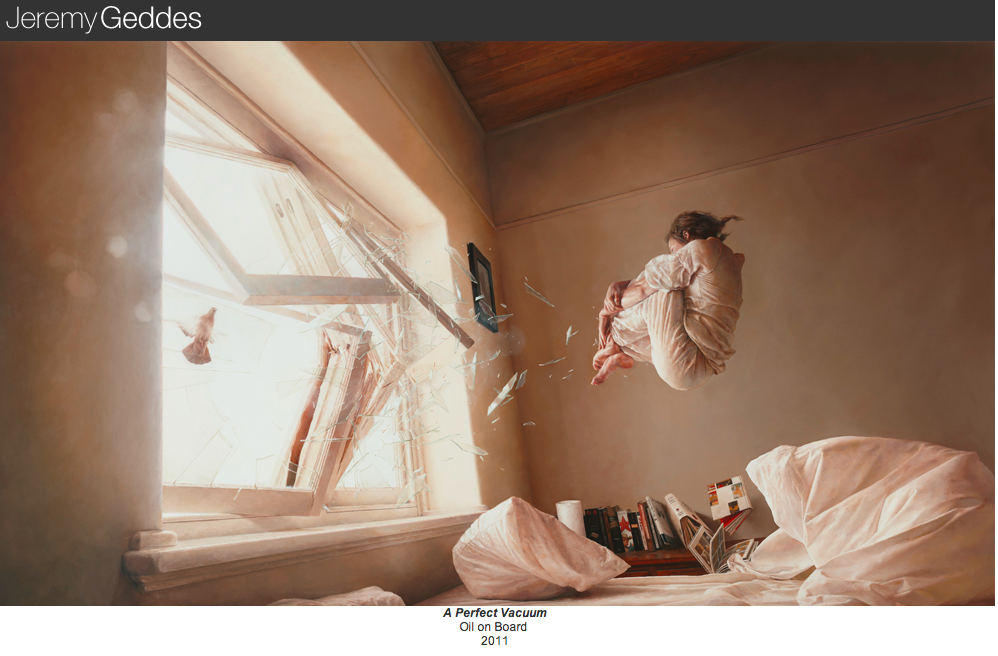
Jeremy Geddes


Penn Program for Mindfulness for Teens

MINDFULME! A 4-WEEK MINDFULNESS PROGRAM FOR TEENS
SUMMARY
MindfulMe! for Teens is a 4-class program that teaches tools to reduce stress, worry, and anxiety, while increasing feelings of well-being. Teens will learn highly effective mindfulness techniques that can be used in and out of school to address the many stresses teens face. If you are a high-school student looking for positive ways to chill out, this program is for you!
QUESTIONS
Contact the program at 215-615-2774 or mindfulness@uphs.upenn.edu.
Subscribe to:
Posts (Atom)