Tuesday, March 12, 2013

7 Reasons Why Not Making Mistakes Is The Biggest Mistake


The FEAR of being nothing, achieving nothing and becoming nothing should be way bigger than the fear of making mistakes.
A life spent making mistakes is not only more honorable, but more useful than a life spent doing nothing. ~ George Bernard Shaw
Here are 7 reasons why not making mistakes is in fact the biggest mistake you could ever make.
1. MISTAKES HELP US DISCOVER WHO WE ARE
With every mistake that we make we discover more and more about ourselves, about who we are, about our limits, about our capabilities, about what we can and cannot do. They help us be more compassionate and more tolerant with ourselves and others.
There is a power inside every human against which no earthly force is of the slightest consequence. ~ Neville Goddard

2. LIFE LESSONS – MISTAKES TEACH US VALUABLE LIFE LESSONS

By making mistakes you will in fact learn valuable life lessons and you will become a happy learner. There is so much we can all learn from our mistakes, and the moment we see them as lessons rather than mistakes, we will no longer have this crazy fear of encountering them along the journey.
Mistakes are a part of being human. Appreciate your mistakes for what they are: precious life lessons that can only be learned the hard way. Unless it’s a fatal mistake, which, at least, others can learn from. ~ Al Franken

3. FORGIVENESS – MISTAKES TEACH US HOW TO FORGIVE

One of the greatest lesson you will learn from making mistakes is forgiveness. With every mistake that you’ll make, you will learn how important it is to forgive yourself and many of the people around you. You will understand that you are not perfect and that perfection doesn’t really exist, only our intentions of doing our best. And who wants to be perfect anyways? Perfection leaves no room for improvement.
The truth is, unless you let go, unless you forgive yourself, unless you forgive the situation, unless you realize that that situation is over, you cannot move forward. ~ Steve Maraboli

4. FREE FROM FEAR – MISTAKES HELP US LET GO OF OUR FEARS

NOT MAKING MISTAKES - isn’t that actually the biggest mistake you could ever make? Life isn’t about avoiding mistakes but rather embracing the idea that mistakes will come your way and being willing to learn from these mistakes. Let go of your fears and allow yourself to really experience life.
There are some people who live 70 years, and there some people who live one year 70 times, repeating what they’re doing over and over in the name of the gold watch or whatever. ~ Wayne Dyer

5. LIVE WITHOUT REGRETS

Believe it or not, if you play it safe you will have more and more regrets about the things you did not do rather than the things you did do, you will regret not making more mistakes. Personally, whenever I hesitate doing something because of the fear of making mistakes, I imagine myself on my death bed ( I know, a bit too crazy but it works ) looking back at my life on what I achieved. By doing so I realize that if i don’t take action NOW, I will have regrets.
I would much rather have regrets about not doing what people said, than regretting not doing what my heart led me to and wondering what life had been like if I’d just been myself. ~ Brittany Renée

6. GROWTH – WITH MISTAKES COMES GROWTH AND PROGRESS

If you don’t make mistakes how can you expect to GROW and to EVOLVE as a human being? How many of us get stuck because they allow the fear of making mistakes to paralyze them? How can we expect to learn anything new if we don’t allow ourselves to make mistakes?
What do you first do when you learn to swim? You make mistakes, do you not? And what happens? You make other mistakes, and when you have made all the mistakes you possibly can without drowning – and some of them many times over – what do you find? That you can swim? Well – life is just the same as learning to swim! Do not be afraid of making mistakes, for there is no other way of learning how to live! ~  Alfred Adler

7. MISTAKES ARE STEPPING STONES TO HAPPINESS

You gain confidence, courage and experience every time you make a new mistake in a very narrow field and in time you will get better and better at the things you love to do. Remember Thomas Edison? He failed more than 10,000 times while working on the light bulb and in the end he succeeded.
When you know exactly what you want and when you are able to see this something in your mind’s eye, nothing can stop you from moving forward, nothing can stop you from achieving your dreams and allowing happiness to enter into your life.
I’ve failed over and over and over again in my life and that is why I succeed. ~ Michael Jordan
Believe it or not, you will not make all the mistakes you expect to make, and when you do make mistakes, the sky will not fall down and the whole world will not stop from doing whatever it is doing just so it can laugh at you.
For more info visit the Purpose Blog.

Friday, March 8, 2013

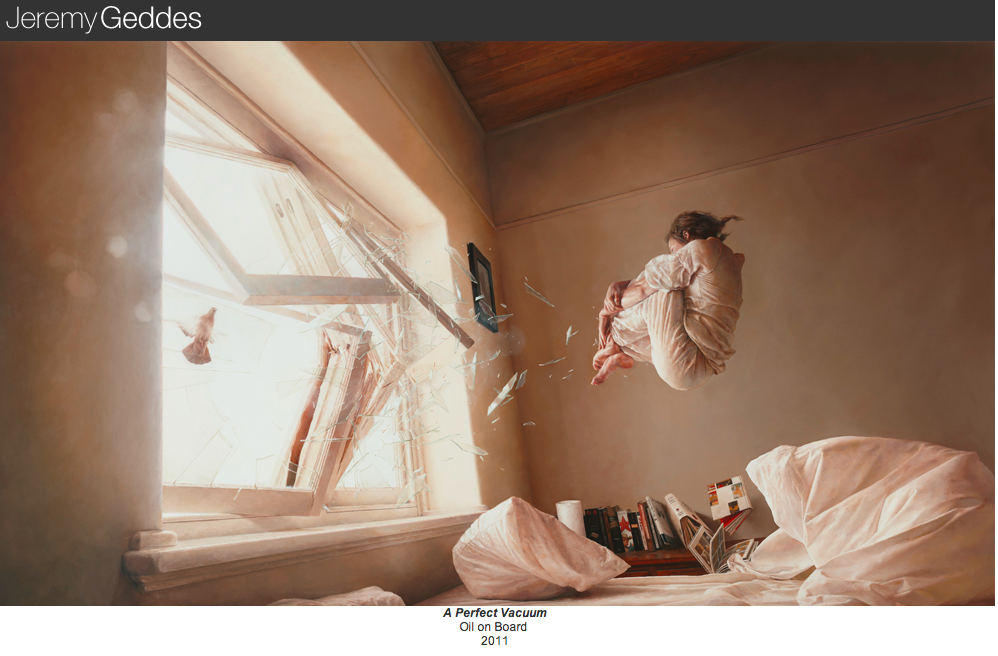
Jeremy Geddes


Here is some eye candy for those of you who love highly refined painting.  Follow the link to see more...   http://www.jeremygeddesart.com/

Penn Program for Mindfulness for Teens


MindfulME! a 4-week Mindfulness Program for Teens

MINDFULME! A 4-WEEK MINDFULNESS PROGRAM FOR TEENS

SUMMARY

MindfulMe! for Teens is a 4-class program that teaches tools to reduce stress, worry, and anxiety, while increasing feelings of well-being. Teens will learn highly effective mindfulness techniques that can be used in and out of school to address the many stresses teens face. If you are a high-school student looking for positive ways to chill out, this program is for you!

QUESTIONS

Contact the program at 215-615-2774 or mindfulness@uphs.upenn.edu.

Tuesday, March 5, 2013

Advanced and Intermediate HW

Advanced HW
  • Subject: Select one of the master paintings from below and produce a full color reproduction/copy.  Be sure to match color and composition as closely as possible.  If you would like an additional challenge incorporate a hidden self-portrait somewhere in the piece.  
  • Scale: Minimum 12X18 inches
  • Media: Any color media (acrylic paint, chalk pastel, oil pastel, colored pencil, oil paint, watercolor paint, etc)
  • PROGRESS CHECK IN (25% complete): Thursday March 21st 
  • FINAL PIECE DUE: Thursday April 11th
________________________________________________________________

Intermediate HW
  • Subject: Select one of the master paintings from below and produce a Black and White (monochrome)  reproduction/copy.  Be sure to match value and composition as closely as possible.  If you would like an additional challenge incorporate a hidden self-portrait somewhere in the piece.  
  • Scale: Minimum 12X18
  • Media: Any Black and White (monochrome) media such as graphite, charcoal, conte crayon, chalk pastel, oil pastel, colored pencil etc.
  • PROGRESS CHECK IN (25% complete): Wednesday March 20th 
  • FINAL PIECE DUE: Wednesday April 10th

You may choose from the following artworks:

*Renaissance


Northern Renaissance:


Baroque:


Neo-Classical:


Romanticism:


Realism:


Impressionism / Post Impressionism:


Painting List (in order of appearance)

Italian Renaissance
  1. Giotto, Lamentation (Mourning of Christ)
  2. Cimabue, Maesta
  3. Masaccio, Tribute Money
  4. Fra Angelico, The Annunciation
  5. Sandro Botticelli, The Birth of Venus
  6. Leonardo Da Vinci, Virgin/Madonna of the Rocks
  7. Raphael, The Alba Madonna
Northern Renaissance
  1. Rogier Van Der Weyden, Portrait of a Lady
  2. Caravaggio, Deposition of Christ
Baroque
  1. Georges De La Tour, Magdalen with the Smoking Flame
  2. Francisco De Zurbaran, St. Francis In Meditation
Neo-Classical
  1. Jean Auguste Dominique Ingres, Louis Bertin
Romanticism
  1. Francisco Goya, The Third of May
  2. William Joseph Mallord Turner, The Burning of The Houses of Parliament
Realism
  1. Thomas Eakins, The Gross Clinic
Impressionism / Post Impressionism
  1. Edgar Degas, The Absinthe Drinkers
  2. Mary Cassatt, Sleeping Baby
  3. Paul Cezanne, Still Life with Apples and Peaches
  4. Henri de Toulouse-Lautrec, At the Moulin Rouge
  5. Paul Gauguin, The Vision of the Sermon (Jacob Wrestling with the Angel)
  6. Henri Rousseau, The Sleeping Gypsy
  7. Pablo Picasso, Guernica
  8. Pablo Picasso, Family of Saltimbanques

Friday, March 1, 2013

CRED MAGAZINE SUBMISSIONS


SUBMIT

ISSUE 5 SUBMISSIONS OPEN!

SUBMIT TO THE PORTFOLIO

+Click here to submit to CRED Issue 5
WHO & WHAT
Greater Philadelphia Area residents and students ages 25 and under should submit artwork, creative essays, poetry, photography, and other awesome looking and meaningful things to The Portfolio section. There are no restrictions on number of submissions per person.
Submissions will be reviewed in an online youth voting session with all published work chosen by other submitting artists. Selected pieces will receive an honorarium and will be published for 30,000 people to see.
WHENIssue 4 Submissions closed February 15th! You can submit to Issue 5 until July.
WHERE & HOW
Fill out a form and upload it with your work

SUBMIT STORIES AND STORY IDEAS

WHO & WHATGreater Philadelphia Area residents ages 25 and under should submit stories and story pitches to be included in the STREET CRED section. There are no restrictions on the number of submissions per person. Stories should focus on youth that are living, studying or working in the Philadelphia Area and have interesting and unique traits, jobs or talents.
Writers and story subjects must be under 25.
Anyone, of any age, can recommend a young person for story coverage.
WHENASAP! Get your work in early!
WHERE & HOWTo recommend a young person for story coverage, contact CRED@villagearts.org
To write for CRED Magazine, fill out this form.

Thursday, February 28, 2013

ARTSY

2400 Works. 215 Exhibitors. Explore the Fair.
Galleria Mazzoleni, Victoria Miro, Sims Reed, Galerie Sho Contemporary Art, Baró Galeria, Galerie Thomas
When the Armory Show opened in 1913, America got its first exposure to European avant-garde art. One hundred years later, The Armory Show 2013 preserves its dedication to innovation and ingenuity, partnering with Artsy to provide an exclusive online preview of the fair. Over 200 Armory Show exhibitors have contributed over 2,400 works—including pieces by Lucio Fontana, Jean-Michel Basquiat, and Yayoi Kusama—for which renowned curators and collectors will offer users a virtual tour of the fair. Preview The Armory Show 2013

Curious to see The Andy Warhol Museum Director Eric Shiner's favorite works from the fair?
View Selection

Works from the fair available for online sale before the fair opens
DAMIEN HIRST
‡For The Love of God Lenticular, 2012
$3,500
Other Criteria
TRENTON DOYLE HANCOCK
‡For the Bucket, 2010
$100
Singapore Tyler Print Institute
SHARON CORE
‡1891, 2012
$8,600
Yancey Richardson
JOHN BALDESSARI
‡Box, Hat, Frame and Chair, 2011
$4,620
Whitechapel Gallery
SUI JIANGUO
‡Made in China (Pink), 2007
$7,700
UCCA Limited Editions
DARREN ALMOND
‡Civil Dawn, 2010
$2,000
Crown Point Press
Go to The Armory Show

Thursday, February 21, 2013

Ross Bown's Notes On Complementary Colors


Basics: Complementary Colors

Last week I posted and introduction to color theory by introducing the color wheel and its components.  Today, I thought I would follow up with a post about complements or complementary colors.

Complementary Color

Primary colors and their compliments
Complementary Colors

Two colors are complementary to each other if when mixed together in equal amounts the resulting color is a neutral gray. As I mentioned before the complement to a primary color is a secondary color, the secondary color is made up of the other two primary colors. For example, the compliment of red is green, which is a mixture of yellow and blue. The other compliments to the primary colors are; orange complements blue and purple complements yellow. 


But the complementary relationship doesn't apply only to the primary and secondary colors.  Any two colors mixed together that create a neutral gray are considered complimentary colors.


How to find the Complimentary Color...


To figure out which colors are complementary the color wheel becomes very useful.  The colors that are directly opposite of each other on the color wheel are the compliments of each other. That is to say, if you were to draw a line from one color through the central axis of the wheel to another color you will find the color that is complementary to your chosen color.  You can do this with any color on the wheel.

Finding the complementary colors on the color wheel


What makes Complimentary Colors Useful

On reason complementary colors are useful is the knowledge that when mixing the two compliments equally you will end up with a neutral gray. This tells us that if we mix the two colors in differing amounts we are making colors that are moving closer and closer to gray. This is one way of muting colors or lessening the intensity of a pure color. The chart below illustrates the gradual progression mixing varying amounts of the two compliments together, in this case red and green. Mixing a little green with red reduces the intensity of the color. The same applies to the other side, adding a little red to the green calms the color's intensity. Continuing the process, gradually mixing more and more equal amounts of each color together you will neutralize the both colors and eventually have gray.


Mixing complementary colors


There is much more that is useful about working with complimentary colors. Complementary colors have a dynamic relationship and can be used to create balance or tension. Many artists use complementary color schemes as a guide their painting.