Wednesday, February 20, 2013

Adrian Gottlieb's Verdaccio Technique


Adrian Gottlieb's Verdaccio Technique


Anticipation
oil on belgian linen
26 X 20 inches


California-based artist Adrian Gottlieb has always been gracious in sharing his knowledge of painting.   His original website was filled with information he had amassed during his period of study at the Florence Academy of Art, and included recipes and procedures for making higher-quality and more archivally-sound materials than were then commonly available on the market.  For those seeking education in traditional painting techniques, his website was a treasure trove of instruction (much of this information has now been transferred to the website dedicated to Gottlieb's Atelier).

In October of 2010,  Gottlieb further shared his methods in an article which appeared in The Artist's Magazine.  Written by Daniel Brown, the article focussed on Gottlieb's verdaccio technique, and also explored the artist's feelings behind the psychology of the painted portrait.  Portions of the article were reprinted online at the Artist's Network, and the following excerpts are from that site.


1. "After I do a drawing and color study, I draw in paint, working on top of a warmimprimatura (first layer, the underpainting) that is closest to burnt umber in color and actually rather dark in value. I try for the color/value of the imprimatura to be the approximate color/value of the shadows of my main subject. When the imprimatura is fully dried, I draw in a similar color."

(For this demonstration, Gottlieb used a heavy linen canvas primed with five layers of acrylic gesso.)

imprimatura - Italian for first paint layer;  the initial stain of color painted on a ground and left visible in areas over subsequent transparent layers;  usually made with an earth color like burnt umber.


2. "In this step I build up the piambura, or white base, thinly so that the finished painting will have a luminous and translucent effect. It’s important that I create a good value relationship and blueprint of the form right from the beginning."

(Gottlieb uses mongoose and bristle filbert brushes from Rosemary & Co..  His medium is a mixture of sun-thickened oil and Canadian balsam.  For oiling out, he uses copal retouch varnish.)

piambura - the lead white base that gives faces their luminosity.


3. "The Verdaccio technique, which uses a verdaccio layer is particularly advantageous for a bright figure against a relatively dark background. I fully model the forms, using temperature variations (cool and warm) between blue-greens and reds. I keep the painting too light (in value) so when I glaze the piece, the tone will fall back down."

(For the verdaccio technique, Gottlieb recommends his students use Sinopia and Chrome Oxide Green from Blue Ridge Oil Colors.  He also suggests using permanent rose from Winsor & Newton, and Indian yellow from Schmincke Mussini.)

verdaccio -  is a style of underpainting, which uses green-grey colours to establish values for later layers of paint. The technique is renowned for being particularly effective when painting flesh tones. As such, it was popular amongst Renaissance artists, and Leonardo da Vinci used verdaccio underpainting in his masterpiece, the Mona Lisa.


Portrait of Gregg
oil, 26 X 20 in.

4. "You can see the results of the primary and secondary glazes, executed in thin layers, using lakes of color that are similar in degree of transparency and tint. I then apply straight color to work out the exact color notes and establish the relationship between figure and ground in Portrait of Gregg (oil, 26×20)."

(On his personal website, Gottlieb lists his color palette as the following colors: lead white, lead tin yellow, yellow ochre, vermilion, transparent red oxide, pyrol ruby red, cobalt blue, transparent sepia, olive green, and ivory black.  When mixing his colors, Gottlieb limits the number of source colors to four or less, and never mixes his colors directly on the canvas.  The student materials list on Gottlieb's Atelier website goes into much greater detail.)


---------------------------------------------


The piambura stage of Gottlieb's paintings shows the tonal sensitivity the artist has, and are so beautiful, that many of his portraits are left at this level of finish.

Piambura of Danni
oil on Belgian linen
20 X 16 in.


Piambura of Heather #3
oil on Belgian linen
20 X 16 in.


Piambura of Heather #1
oil on Belgian linen
20 X 16 in.


Piambura of Heather #2
oil on Belgian linen
20 X 16 in.


Piambura of Heather #4
oil on Belgian linen
20 X 16 in.


Piambura of Heather #5
oil on Belgian linen
20 X 16 in.
*(Taken from www.underpaintings.blogspot.com)

Thursday, February 14, 2013

Landscape Goodness

Here is some contemporary landscape eye candy for you to enjoy.

Patricia Schaefer (Click the Link)


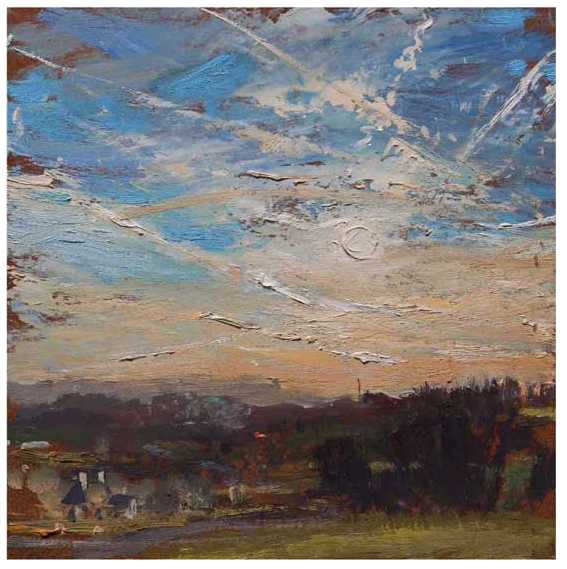
John David Wissler (Click the Link)

"Interviewer: You got your MFA from the Parsons School of Design and have studied with an impressive list of painters including Leland Bell, Paul Resika, and Larry Rivers. Please tell us something about your evolution as a painter and what has lead you to become the painter you are today.

JDW: First, I want to thank you for asking me to do this interview with you Larry, I am honored.
This is a great question! Early on, I was a bit of a perfectionist (perhaps the poster child). I wanted to be in control of it all. I drew and rendered everything, seeing all the details as important and painted some very pleasing, pretty, dead paintings! My high school art teacher, Faith Lang, and later my friend, professor and artist George Sorrels, opened the door for me to see great painting. This was the beginning of painting for me. In Claude, Corot, Inness, Cezanne, and Matisse, I saw moving spaces, full of air! Color that moved my eye, that took chances and was never static. I realized I was not happy painting how I was taught. I needed to begin to move the paint, free myself from the rules. Explore; push myself to move beyond what was comfortable to me, to see! I began to consider building and creating the tension between shape and color, Opening the picture plain in a dynamic way. This can be heightened color and value or subtle. It is truly about building relationships on the picture plane that create believable space. No longer was I only interested in the surface of things, but more.
As Corot said in his great letter to his friend Stevens Graham “Clouds that stand still are not clouds, motion, activity, life, yes, life is what we want…life!” This is something I try to bring to all my work, open air or studio invention. I am not at all interested in making narrative painting, but, my painting is an honest reflection of my life through paint. I don’t expect the viewer to “get “this. I enjoy when someone tells me a story about what they see, how they relate to my painting. When someone does get it, that is very satisfying for me."

Thursday, February 7, 2013

Color Theory

Color Theory is essential when it comes to painting.  This is a traditional color wheel showing the pure color (also referred to as hue). You will see that each color is then tinted with the addition of white, toned with the addition of grey and shaded with the addition of black. This is the most simple way to control value with color, note that an even greater range of tones is possible by mixing more ore less white, grey or black accordingly.


This exercise is called a color identity test. Here the student is working with paints straight from the tube, unmixed. Each color is applied as a thick "chip" of paint and then thinned with linseed oil in the box below to see how the color acts as a transparent glaze and with the addition of white in the box below that. The true nature of a color is difficult to read in its pure unmixed form. Adding white or thinning the color allows us to see the temperature and "feel" of the color much easier. The pure color unmixed is said to be fully saturated. Chroma is another word that describes how bright or intense a color is.


This student color chart shows color tone gradations matching a grey scale, color wheels, and neutrals made through the use of compliments. Each "test" shows a different effect and range of tones and color saturations. Note the bottom color wheel is using the mixture of compliments to achieve neutralized tones.


This scale demonstrates the use of complimentary colors to achieve darker values. At some point, the chips will be so balanced that the color is neither one nor the other. This chip is what we would classically call mud, a color that's over-mixed with it's compliment or is too neutral to have a color identity.


This student mixing chart shows neutral gradations of various pairs of colors (generally complimentary colors).


This final student color wheel chart shows different triads. Color wheels can be made of as many colors there are tube pigments. Which red, which yellow, which blue should be used? The reality for painters is that we are dependent on pigments, not just theories of colors. Experimenting with many color wheels and many primary triads is important and closer to the truth for painters. Note the earth palette color wheel of yellow ochre, ivory black (blue) and venetian red is a much less saturated version of a traditional color wheel.


Additional information here

*Al Gury's Color For Painters is an excellent reference and resource I found to be extremely useful and have referenced here, copies can be found on amazon for as little as $8.

Painting Demonstrations


These tutorials should be useful for refining your figure paintings. Focus on color temperature and saturation differences to model the form and develop convincing light/shadow. Good luck!


Courtesy of Al Gury's Alla Prima: A contemporary Guide to Traditional Direct Painting

Click Here for a quick read concerning blending vs. optical mixing.

Monday, February 4, 2013

29th Annual High School Art Show @ The Philadelphia Sketch Club

Closing Reception 
February 24th,  2013
2:00-4:00 PM 
Gallery Hours:
MWF,Sat/Sun 1-5 PM

*Flyer Artwork by Capa Senior Emanuel Rodriguez. Best in Show 2012

Thursday, January 31, 2013

Capa Visual Arts T-Shirts


Finally a t-shirt that GETS IT!!!!! The creation of a piece of artwork, from nothing is one of the hardest things you can do, yet one of the most rewarding. Wear this and rep for Visual Arts!!!
Lovingly created for you by Stallie....

Thursday, January 24, 2013

15 Things You Should Give Up.


I received this article in an email recently.  I found the information to be really helpful and seeing that 1,170,000 Million other people shared it with someone else suggests that the author may be on to something.  I try to actively do a little of this each day and thought it would of interest to some of you.  Enjoy!


"Here is a list of 15 things which, if you give up on them, will make your life a lot easier and much, much happier. We hold on to so many things that cause us a great deal of pain, stress and suffering – and instead of letting them all go, instead of allowing ourselves to be stress free and happy – we cling on to them. Not anymore. Starting today we will give up on all those things that no longer serve us, and we will embrace change. Ready? Here we go:
1. Give up your need to always be right
 There are so many of us who can’t stand the idea of being wrong – wanting to always be right – even at the risk of ending great relationships or causing a great deal of stress and pain, for us and for others. It’s just not worth it. Whenever you feel the ‘urgent’ need to jump into a fight over who is right and who is wrong, ask yourself this question: “Would I rather be right, or would I rather be kind?” Wayne Dyer. What difference will that make? Is your ego really that big?
2. Give up your need for control
Be willing to give up your need to always control everything that happens to you and around you – situations, events, people, etc. Whether they are loved ones, coworkers, or just strangers you meet on the street – just allow them to be. Allow everything and everyone to be just as they are and you will see how much better will that make you feel.
“By letting it go it all gets done. The world is won by those who let it go. But when you try and try. The world is beyond winning.” Lao Tzu
3. Give up on blame
 Give up on your need to blame others for what you have or don’t have, for what you feel or don’t feel. Stop giving your powers away and start taking responsibility for your life.
4. Give up your self-defeating self-talk
 Oh my. How many people are hurting themselves because of their negative, polluted and repetitive self-defeating mindset? Don’t believe everything that your mind is telling you – especially if it’s negative and self-defeating. You are better than that.
“The mind is a superb instrument if used rightly. Used wrongly, however, it becomes very destructive.” Eckhart Tolle
5. Give up your limiting beliefs
about what you can or cannot do, about what is possible or impossible. From now on, you are no longer going to allow your limiting beliefs to keep you stuck in the wrong place. Spread your wings and fly!
“A belief is not an idea held by the mind, it is an idea that holds the mind” Elly Roselle
6. Give up complaining
 Give up your constant need to complain about those many, many, maaany things – people, situations, events that make you unhappy, sad and depressed. Nobody can make you unhappy, no situation can make you sad or miserable unless you allow it to. It’s not the situation that triggers those feelings in you, but how you choose to look at it. Never underestimate the power of positive thinking.
7. Give up the luxury of criticism
Give up your need to criticize things, events or people that are different than you. We are all different, yet we are all the same. We all want to be happy, we all want to love and be loved and we all want to be understood. We all want something, and something is wished by us all.
8. Give up your need to impress others
Stop trying so hard to be something that you’re not just to make others like you. It doesn’t work this way. The moment you stop trying so hard to be something that you’re not, the moment you take off all your masks, the moment you accept and embrace the real you, you will find people will be drawn to you, effortlessly.
9. Give up your resistance to change
 Change is good. Change will help you move from A to B. Change will help you make improvements in your life and also the lives of those around you. Follow your bliss, embrace change – don’t resist it.
“Follow your bliss and the universe will open doors for you where there were only walls” 
Joseph Campbell
10. Give up labels
 Stop labeling those things, people or events that you don’t understand as being weird or different and try opening your mind, little by little. Minds only work when open. “The highest form of ignorance is when you reject something you don’t know anything about.” Wayne Dyer
11. Give up on your fears
Fear is just an illusion, it doesn’t exist – you created it. It’s all in your mind. Correct the inside and the outside will fall into place.
“The only thing we have to fear, is fear itself.”
 Franklin D. Roosevelt
12. Give up your excuses
Send them packing and tell them they’re fired. You no longer need them. A lot of times we limit ourselves because of the many excuses we use. Instead of growing and working on improving ourselves and our lives, we get stuck, lying to ourselves, using all kind of excuses – excuses that 99.9% of the time are not even real.
13. Give up the past
I know, I know. It’s hard. Especially when the past looks so much better than the present and the future looks so frightening, but you have to take into consideration the fact that the present moment is all you have and all you will ever have. The past you are now longing for – the past that you are now dreaming about – was ignored by you when it was present. Stop deluding yourself. Be present in everything you do and enjoy life. After all life is a journey not a destination. Have a clear vision for the future, prepare yourself, but always be present in the now.
14. Give up attachment
This is a concept that, for most of us is so hard to grasp and I have to tell you that it was for me too, (it still is) but it’s not something impossible. You get better and better at with time and practice. The moment you detach yourself from all things, (and that doesn’t mean you give up your love for them – because love and attachment have nothing to do with one another,  attachment comes from a place of fear, while love… well, real love is pure, kind, and self less, where there is love there can’t be fear, and because of that, attachment and love cannot coexist) you become so peaceful, so tolerant, so kind, and so serene. You will get to a place where you will be able to understand all things without even trying. A state beyond words.
15. Give up living your life to other people’s expectations
Way too many people are living a life that is not theirs to live. They live their lives according to what others think is best for them, they live their lives according to what their parents think is best for them, to what their friends, their enemies and their teachers, their government and the media think is best for them. They ignore their inner voice, that inner calling. They are so busy with pleasing everybody, with living up to other people’s expectations, that they lose control over their lives. They forget what makes them happy, what they want, what they need….and eventually they forget about themselves.  You have one life – this one right now – you must live it, own it, and especially don’t let other people’s opinions distract you from your path.
With all my love,
"